Case study Barßel and Ramsloh
To demonstrate the potential savings for pool operations under a wide range of operating conditions, HANSA documented two five-month case studies in the region.
Example 1: wimming pool in Ramsloh, Germany
Example 2: Swimming pool Barßel, Germany


01
Swimming Pool in Ramsloh
Unit 1 » 12,000 m³/h with heat pump
Unit 2 » 10,000 m³/h
Modeling approach: Modeling of both units and the building

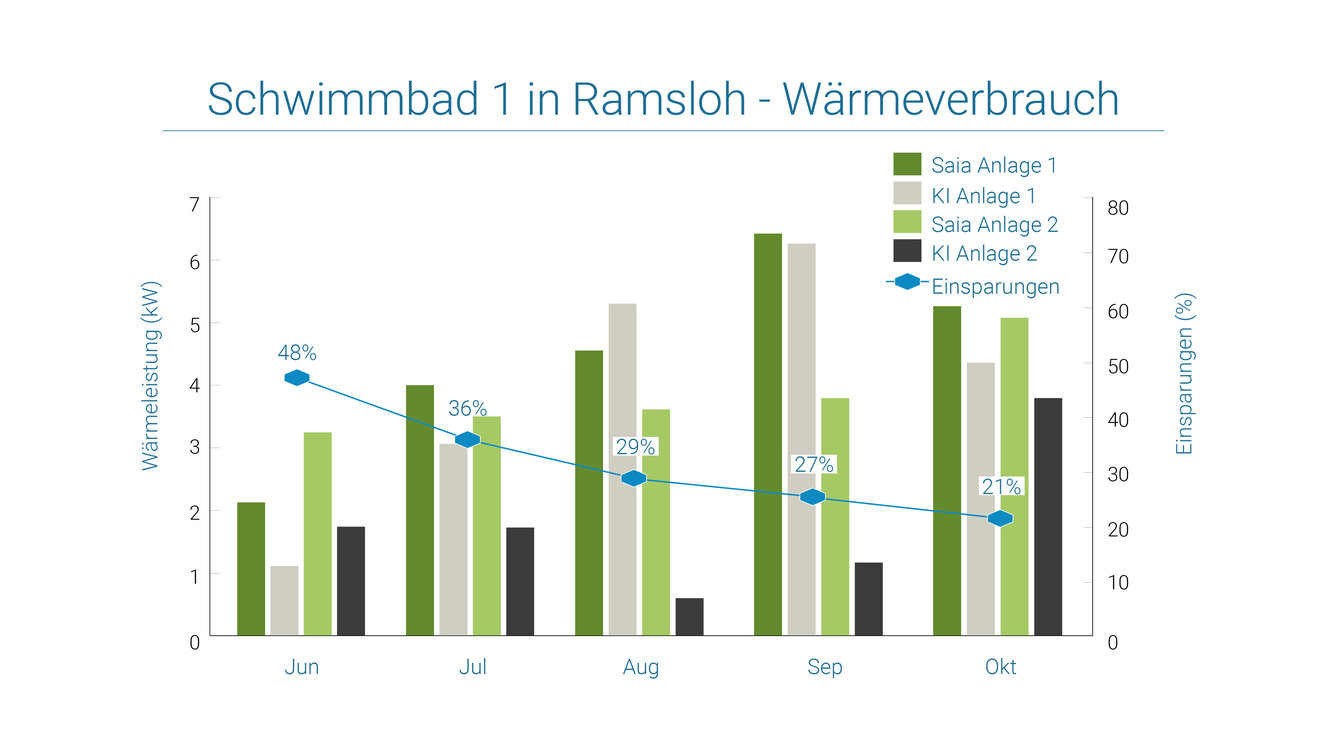
Result for Ramsloh
Municipality of Saterland saves almost € 5,000 per year.

02
Swimming Pool in Barßel
Unit 1 » 12,000 m³/h with heat pump
Unit 2 » 6,000 m³/h
Modeling approach: Modeling of both devices, standardized building model

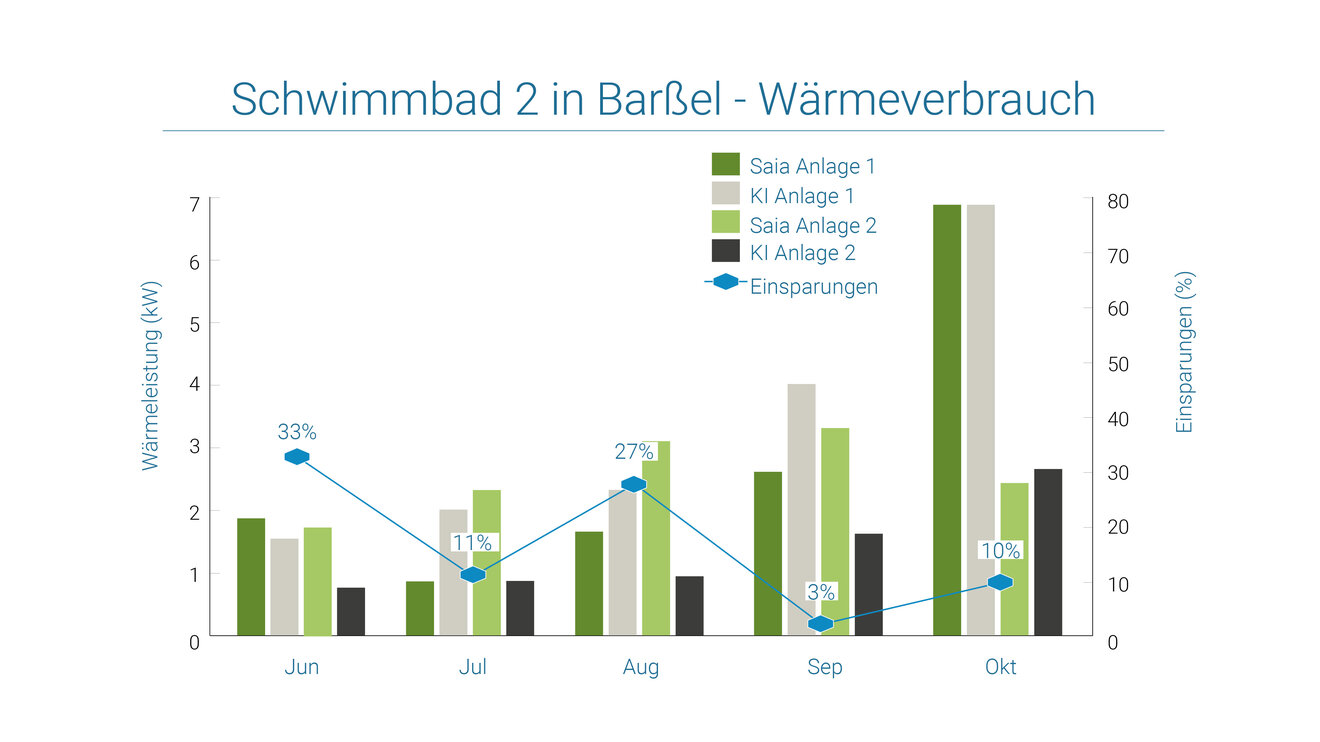

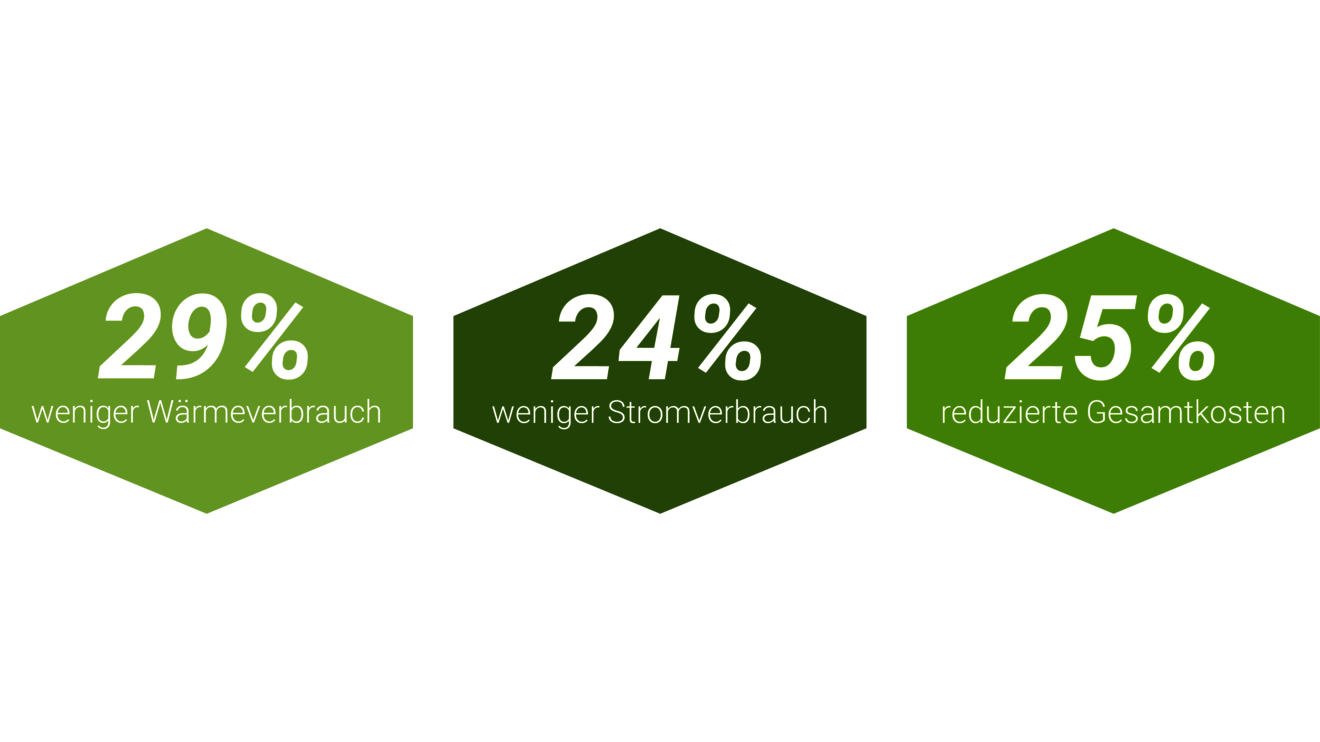
Barßel Result
Barßel also saves 20% in energy costs for the operation of its equipment!

Further case studies
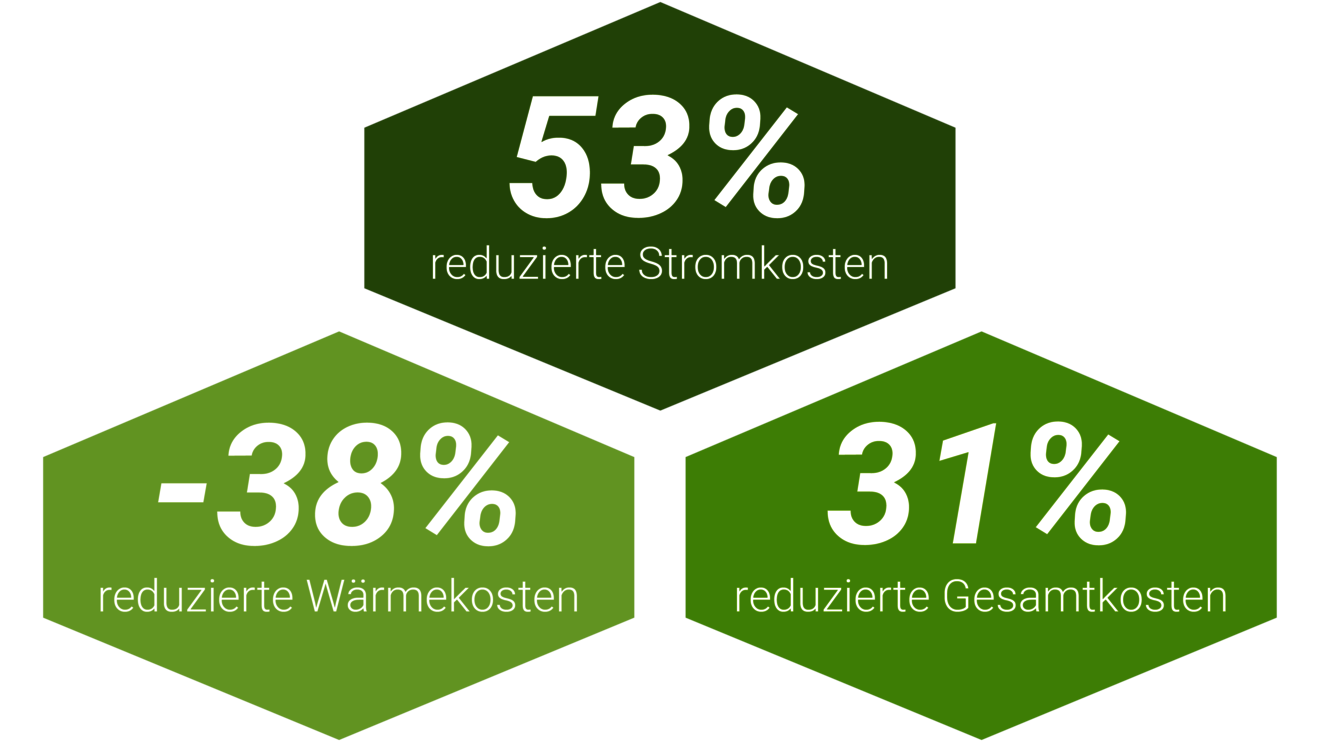
Two additional swimming pools were evaluated for their potential energy savings using the "etaSmart" system. Over the course of a year, the ventilation units were operated on an alternating daily basis—sometimes with the AI-driven system, sometimes without. Both pools are equipped with a dehumidification unit for the pool area, neither of which includes an integrated heat pump. The unit in Bad Zwischenahn has an airflow capacity of 16,000 m³/h, while the one in Steinfeld has a capacity of 12,000 m³/h. In Steinfeld, the pool is actually closed during the summer months. In Bad Zwischenahn, the AI system leads to an increased demand for thermal energy; however, this is offset by a disproportionately large reduction in electricity consumption, resulting in a 31% decrease in total costs. Furthermore, the higher temperatures maintained in the pool area help to reduce evaporation losses from the pool water.
Steinfeld Result

Bad Zwischenahn Result